

Marine vessels operate in demanding environments where even minor system failures can lead to significant downtime, safety risks, and expensive repairs. From clogged pipelines to damaged pumps, many of these issues stem from one overlooked factor, contamination within fluid systems.
For vessel owners and operators in Malaysia, understanding the root causes of these failures and implementing preventive solutions such as marine Y-strainers is essential for maintaining operational efficiency and protecting critical equipment.
Why Marine System Failures Are More Common Than You Think
Marine systems are constantly exposed to harsh conditions, including saltwater, debris, corrosion, and fluctuating pressure levels. Over time, these factors contribute to wear and tear across essential components such as pumps, valves, and heat exchangers.
Without proper filtration, even small particles can accumulate and disrupt system performance. This is where marine Y-strainer Malaysia solutions play a crucial role in preventing avoidable breakdowns.
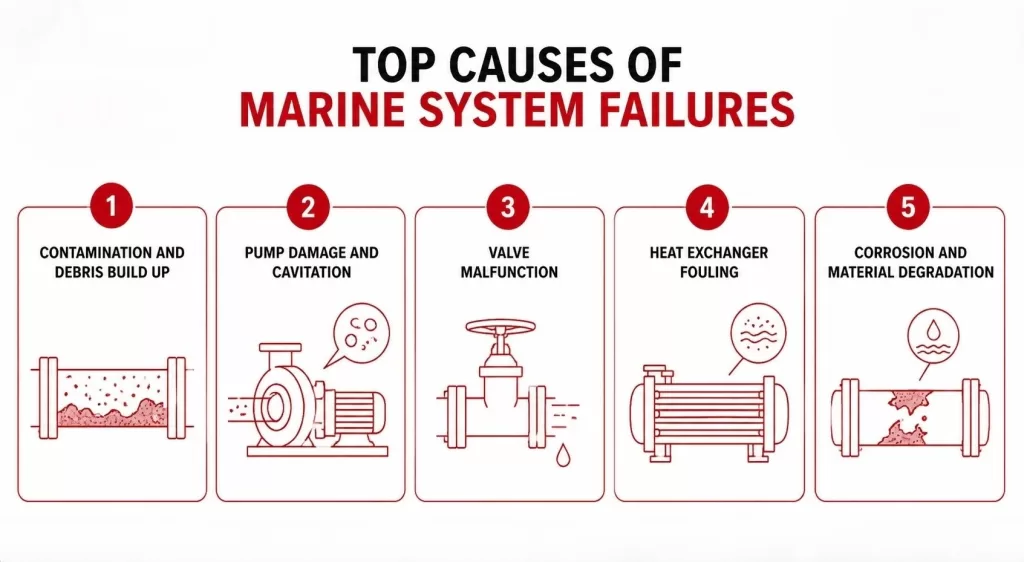
Top Causes of Marine System Failures
Contamination and Debris Build Up
One of the leading causes of failure in marine systems is the accumulation of dirt, rust, scale, and foreign particles within pipelines. These contaminants can enter through seawater intake systems or during routine operations.
When left unchecked, debris can block flow paths, reduce efficiency, and cause pressure imbalances.
Pump Damage and Cavitation
Pumps are highly sensitive to impurities. When solid particles pass through, they can damage internal components such as impellers and seals.
In severe cases, contamination can lead to cavitation, a condition where vapor bubbles form and collapse, causing mechanical damage and reduced pump lifespan.
Valve Malfunction
Valves are critical for controlling flow and pressure. However, debris can prevent proper sealing, leading to leaks or inconsistent operation.
This affects system performance and may also compromise safety, especially in high pressure marine environments.
Heat Exchanger Fouling
Heat exchangers rely on clean fluid flow to maintain temperature regulation. When fouling occurs due to sediment or biological growth, heat transfer efficiency drops significantly.
This can result in overheating, increased energy consumption, and potential equipment failure.
Corrosion and Material Degradation
Marine environments accelerate corrosion due to constant exposure to saltwater and humidity. Contaminants can worsen this process by creating deposits that trap moisture and promote rust formation.
Over time, this weakens system components and increases the risk of leaks or structural failure.
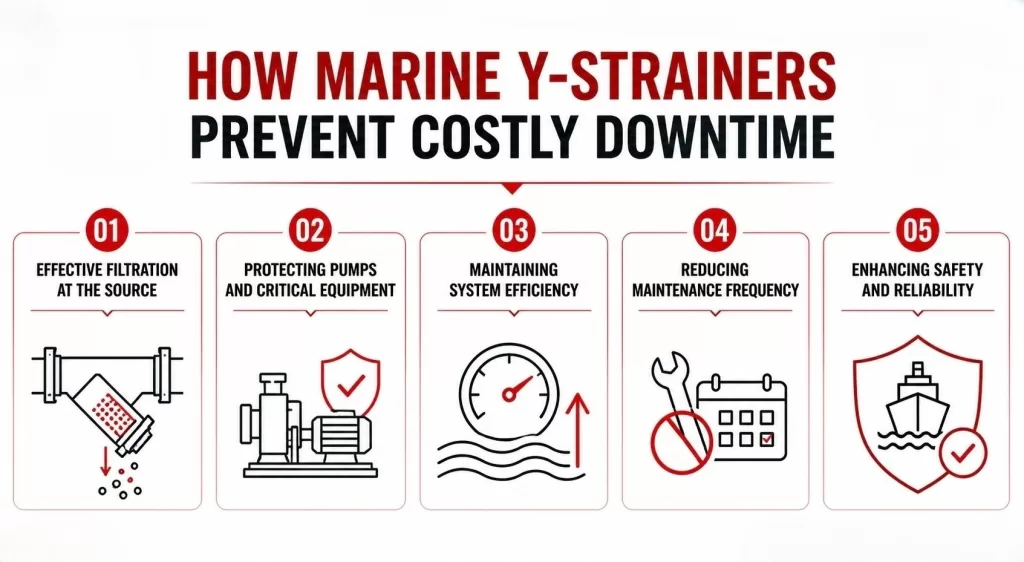
How Marine Y-Strainers Prevent Costly Downtime
Effective Filtration at the Source
A marine Y-strainer is designed to remove unwanted particles from fluid systems before they reach sensitive equipment. Installed directly in pipelines, it acts as the first line of defence against contamination.
By filtering out debris early, it prevents blockages and protects downstream components.
Protecting Pumps and Critical Equipment
By ensuring cleaner fluid flow, Y-strainers reduce the risk of pump damage, cavitation, and wear. This extends the lifespan of key equipment and minimises the need for frequent repairs or replacements.
Maintaining System Efficiency
Clean systems operate more efficiently. With fewer obstructions, fluid flows smoothly, pressure remains stable, and energy consumption is optimised.
This is especially important for vessels operating long hours where efficiency directly impacts operating costs.
Reducing Maintenance Frequency
Without proper filtration, systems require frequent cleaning and maintenance. Y-strainers significantly reduce the accumulation of debris, allowing for longer intervals between servicing.
This helps lower labour costs and minimise operational disruptions.
Enhancing Safety and Reliability
Reliable systems are safer systems. By preventing unexpected failures, Y-strainers contribute to safer vessel operations and reduce the risk of accidents caused by equipment malfunction.
Y-Strainer vs No Filtration A Quick Comparison
| Aspect | With Y-Strainer | Without Filtration |
|---|---|---|
| System Cleanliness | High | Low |
| Equipment Lifespan | Extended | Reduced |
| Maintenance Frequency | Lower | Higher |
| Risk of Failure | Minimal | High |
| Operational Efficiency | Optimised | Inconsistent |
Signs Your Marine System Needs a Y-Strainer
- Frequent pump or valve failures
- Unusual pressure drops in pipelines
- Increased maintenance or cleaning requirements
- Reduced system efficiency
- Visible debris in fluid systems
If your vessel is experiencing any of these issues, installing a marine Y-strainer in Malaysia can be a practical and cost effective solution.
Why Choosing the Right Y-Strainer Matters
Not all strainers are created equal. Selecting the right material, mesh size, and design is crucial for optimal performance in marine environments.
A high quality Y-strainer should offer:
- Corrosion resistant materials such as stainless steel or bronze
- Suitable filtration capacity for your system
- Easy maintenance and cleaning access
- Compliance with marine industry standards
Working with a trusted supplier ensures that your filtration system meets operational requirements and delivers long term reliability.
Why Choose Unimech Marine
When it comes to sourcing reliable marine Y-strainer Malaysia solutions, choosing the right partner is just as important as the product itself.
Unimech Marine provides engineered filtration solutions designed for demanding marine environments, helping vessel operators reduce downtime and improve system performance.
Key advantages include:
- High quality, marine grade materials
- Wide range of Y-strainer configurations
- Technical expertise and product guidance
- Proven reliability across marine applications
- Responsive local support in Malaysia
Prevent Costly Marine Downtime Today
Protect your vessel systems from contamination, reduce maintenance issues, and improve overall efficiency with a reliable marine Y-strainer designed for long term performance in demanding marine environments.
Conclusion
Marine system failures are often preventable with the right approach to maintenance and filtration. Contamination, debris build up, and equipment wear can quickly escalate into costly downtime if left unaddressed.
By investing in a reliable marine Y-strainer in Malaysia, vessel operators can protect critical systems, improve efficiency, and ensure safer operations at sea. In a demanding industry where every minute counts, proactive filtration is essential.
Frequently Asked Questions (FAQs)
How do I know what size Y-strainer I need for my system?
The correct size depends on your pipeline diameter, flow rate, and operating pressure. As a general rule, the Y-strainer should match your pipe size, but you also need to consider mesh size and flow capacity to avoid restricting performance. Consulting a supplier helps ensure proper sizing.
What mesh size should I choose for a marine Y-strainer?
Mesh size depends on the type of debris you want to filter. Finer mesh captures smaller particles but may clog faster, while coarser mesh allows higher flow with less frequent cleaning. Most marine applications use a balanced mesh size to protect equipment without causing pressure drop issues.
Will installing a Y-strainer reduce water flow or pressure?
A properly selected and maintained Y-strainer should have minimal impact on flow and pressure. However, if the strainer is undersized or clogged with debris, it can cause pressure drops. Regular maintenance prevents this issue.
Where should a Y-strainer be installed on a vessel?
Y-strainers are typically installed upstream of critical equipment such as pumps, valves, and heat exchangers. This ensures contaminants are removed before they can cause damage. Correct placement is key to maximising protection.
How long does a marine Y-strainer typically last?
The lifespan depends on material quality, operating conditions, and maintenance practices. High quality marine Y-strainers made from stainless steel or bronze can last for many years when properly maintained and regularly cleaned.
Disclaimer:
The information in this article is for general guidance only and does not replace professional marine engineering or regulatory advice. Always verify specifications and compliance requirements with qualified professionals or relevant authorities.